Best Books Set in France for Every Kind of Reader
France in fiction appears in two dominant registers: the literary-intellectual world of nineteenth-century Paris and the moral crucible of Occupied France during WWII. These registers reveal different things about the same civilization -- what it produced at its height and what it became under pressure.
May 2026 · 7 min read · The Pagesmith
France is one of the most written-about countries in world literature, which means the quality varies enormously. At one end is France as aesthetic backdrop — the cafes, the light, the cheese, the specific glamour of Paris deployed as shorthand for a certain kind of beauty. At the other end is France as moral argument: a civilization that produced some of the most serious political and literary thinking in European history and then, under Nazi occupation, revealed how much of that self-image was contingent on circumstances that could be changed. The books here belong to the second category. They use France not as backdrop but as the subject — and the France they describe is either the country at its most ambitious or the country at its most exposed, with very little comfortable middle ground between those two versions.
Why France Produces Two Distinct Literary Registers
The Paris of Victor Hugo and James Baldwin is a specific city: dense with political history, organized around ideas as social currency, capable of producing a kind of intellectual seriousness that Anglo-American culture tends to treat with either reverence or suspicion. The France of World War II is a different country: the same streets, the same buildings, the same people, operating under conditions that required every individual to make a moral choice, often daily, about what they were willing to do and what they were not. Reading the first version of France makes the second more devastating. Reading the second makes the first look fragile. Together, these two Frances produce a picture of a civilization that is more honest than either could supply alone.
The France of great literature is not one country but two — the civilization that produced Victor Hugo and the civilization that had to decide, under occupation, how much of that inheritance it was willing to defend.
The Books
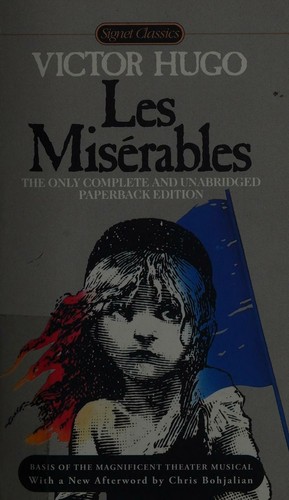
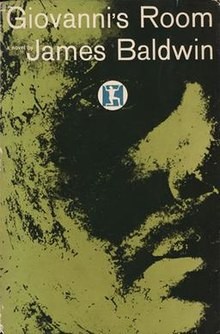
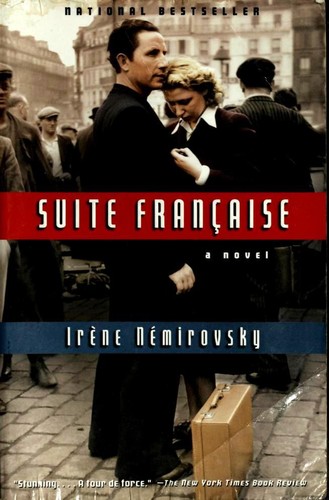
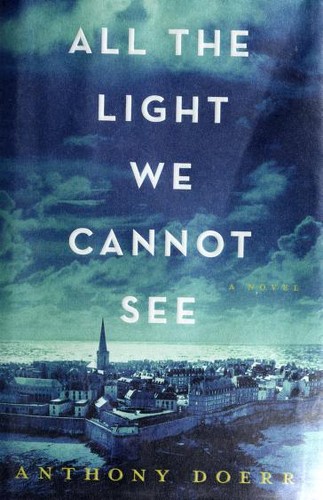
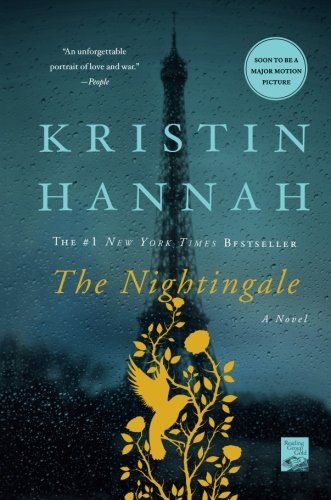
Les MiserablesVictor HugoThe Paris of Les Miserables is the one against which all subsequent French novels implicitly measure themselves: a city of revolutionary energy, radical inequality, moral grandeur, and spectacular suffering, rendered with a comprehensiveness that makes the novel less a story than a total immersion in a civilization. Hugo’s Paris is physically specific — the sewers, the barricades, the specific geography of neighborhoods and class — and the argument it makes about justice, mercy, and the relationship between law and morality has not been superseded. The longest and most complete account of what France believed itself to be at its most idealistic. Giovanni’s RoomJames BaldwinBaldwin’s Paris is the city that was available to Black Americans in the 1950s as an escape from the specific violence of American racism — a place where identity could be constructed differently, where the self was not predetermined by the circumstances of birth. The novel uses Paris not as liberation but as a testing ground: David’s love for Giovanni is possible in Paris in ways it would not be in America, but the freedom Paris offers does not exempt him from the self-deceptions that destroy them both. The most psychologically precise account of what Paris meant to the generation of Black American writers who went there, and what it cost them to discover its limits. Suite FrancaiseIrene NemirovskyWritten during the Occupation itself, not in retrospect, and published only in 2004 after the manuscript was discovered among the author’s papers — Nemirovsky died at Auschwitz in 1942. That context is inseparable from the reading experience, but the novel stands independently as the most precise account of what the Occupation looked like at street level: the specific social negotiations, the small collaborations, the moments of dignity and the moments of complicity, rendered with the clarity of someone who was observing the event without knowing how it would end. No other book on this list was written by someone who did not survive it. All the Light We Cannot SeeAnthony DoerrDoerr’s Pulitzer winner uses the coastal town of Saint-Malo during its destruction in 1944 as the setting for two parallel stories — a blind French girl and a German soldier — whose convergence is structured with the precision of a thriller and the emotional weight of a novel about what the war asked of very ordinary people. The France here is not Paris or the Resistance but the provincial coast, rendered with the specificity of someone who spent years in the research rather than years in the imagination, and the novel’s argument about beauty persisting in the midst of destruction is made through the physical detail of the setting as much as through the characters. The NightingaleKristin HannahHannah’s novel is the most accessible and emotionally direct account of the Occupation on this list, and the one that most fully centers the experience of French civilians rather than soldiers or resisters. The two sisters at its center make incompatible choices — accommodation for survival, active resistance at enormous risk — and Hannah renders both with enough empathy that neither woman is simply right. The Loire Valley setting is precisely rendered and the novel’s argument about what women’s wartime experience looked like, and why it has been so consistently under-represented, is made through the specific texture of daily life under the Occupation rather than through the heroic set pieces that male-centered war fiction tends to favor. Code Name VerityElizabeth WeinWein’s novel uses Nazi-occupied France as the setting for the most formally inventive entry on this list — a British spy writing her confession, which is not the confession it appears to be. The France here is specifically the France of the Resistance and the collaborators, and the novel’s argument is about what friendship looks like when it is the only reliable loyalty remaining. The structural twist, which the reader can see approaching without being able to stop it, arrives with the full weight of the relationship Wein has built, and France in its Occupation-era texture — the checkpoints, the safe houses, the specific geography of airfields and market towns — is as precisely rendered as the relationship itself. Who This Is For
Readers who want fiction that uses France as an argument rather than a backdrop — who are interested in what a civilization reveals about itself both when it is producing its best thinking and when it is being asked to defend it under the worst possible conditions. Also readers who have seen Occupied France in film and want the novelistic depth that film cannot achieve in the same way. The historical fiction and literary fiction catalogues have more in this territory.
Frequently Asked Questions
Q: What is the best novel about the French Resistance?
A: Suite Francaise is the most historically intimate because it was written during the Occupation rather than in retrospect. Code Name Verity is the most formally inventive. The Nightingale is the most emotionally direct and the most accessible. All three are worth reading; Suite Francaise is the most irreplaceable.
Q: What is the best Hemingway book set in France?
A: A Moveable Feast, his memoir of 1920s Paris, is the most directly French. A Farewell to Arms is partly set in France and Italy. The Sun Also Rises has significant Paris sections. For the experience of literary Paris between the wars from a novelist’s perspective, A Moveable Feast is essential.
Q: How accurate is the historical detail in The Nightingale?
A: Kristin Hannah spent years researching the novel, and the historical detail of daily life under Occupation — the rationing, the curfews, the specific social negotiations required to navigate collaboration without fully becoming a collaborator — is considered accurate in atmosphere and texture. The characters are fictional; the conditions they navigate are historically grounded.
Q: What should I read after Les Miserables if I want more Hugo?
A: The Hunchback of Notre-Dame is Hugo’s other great Paris novel — less sprawling in its social scope but more gothically intense, and the cathedral itself is as fully rendered a character as any of the human ones. Notre-Dame de Paris, as it is properly titled, was published 31 years before Les Miserables and reads differently but shares Hugo’s investment in the city as a moral landscape.
Not sure which of these is right for you specifically? The Pagesmith quiz matches you to books based on your mood, pacing preference, and reading goals, not bestseller lists. Takes two minutes.