Best Popular Science Books That Read Like Literature
The best popular science books earn their readability by finding the human story inside the science -- the researcher's obsession, the historical accident, the moment a discovery changed what we thought we were. These books use narrative to make science not just accessible but urgent.
May 2026 · 8 min read · The Pagesmith
Popular science has a failure mode that is the opposite of what it intends: in making science accessible, it makes it safe, which makes it inert. The science becomes a series of interesting facts rather than a living argument about the nature of reality, and the reader finishes informed but not changed. The books here are the other kind. They are not primarily about making difficult ideas easy — they are about making the reader understand why the ideas matter, which requires finding the human story inside the science: the obsession that drove the research, the historical accident that opened the question, the moment when a discovery changed not just what we knew but what we thought we were. Several of them are as formally constructed as any literary novel. All of them produce something beyond information.
What Separates the Best Popular Science from Explanation
The distinction is between explaining and arguing. A book that explains tells you what scientists have discovered and how they discovered it. A book that argues does something additional: it makes a case for why that discovery matters, what it changes, and what follows from accepting it. The best popular science is the second kind. Elizabeth Kolbert is not just describing which species have gone extinct; she is arguing that we are currently living through a mass extinction event of our own creation and that this is the most important fact about the present moment. Atul Gawande is not just explaining how medicine handles end-of-life care; he is arguing that medicine has confused prolonging life with living it, and that this confusion is causing enormous and unnecessary suffering. Both are making arguments that the reader is expected to engage with, not just receive.
The best popular science books do not just inform. They argue — about what the science means, what it changes, and what the reader is supposed to do with the knowledge it produces.
The Books
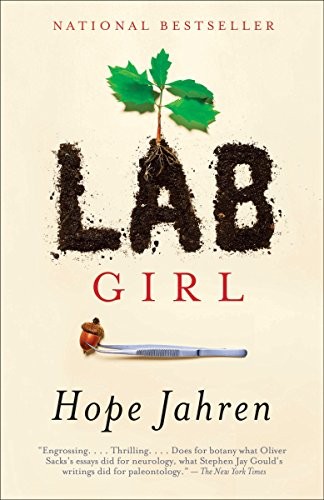
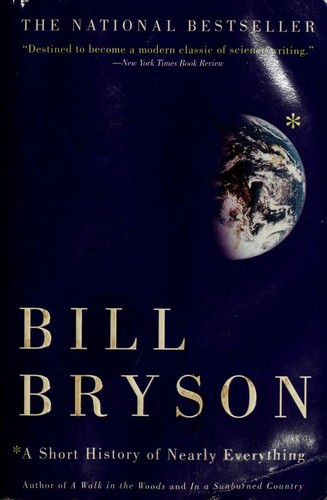
The Emperor of All MaladiesSiddhartha MukherjeeMukherjee’s biography of cancer is the clearest example of a popular science book that works as literature: it has narrative shape, character, dramatic stakes, and a sustained argument that accumulates across 600 pages. The history of cancer treatment is also the history of medicine’s relationship to uncertainty — the confident certainties of radical mastectomy and high-dose chemotherapy replaced by the humility of targeted therapy — and Mukherjee is interested in what that history reveals about how science works, not just what it has produced. The Pulitzer Prize winner demonstrates that the biography format, applied to a disease rather than a person, can do everything a great biography does. The Sixth ExtinctionElizabeth KolbertKolbert’s Pulitzer winner is structured as a series of field visits — to the reefs, to the rainforest, to the bat caves of the American Northeast — each of which demonstrates one aspect of the mass extinction currently underway. The structure is brilliant because it prevents the argument from becoming abstract: each chapter introduces a specific species, specific researchers, specific geography, and then makes the extinction argument through that specificity. The cumulative effect of thirteen chapters is considerably more devastating than any single summary of the data could be. This is the formal achievement of the best science narrative: using particular instances to build an argument that the aggregated data, presented as aggregated data, cannot make with the same force. Being MortalAtul GawandeGawande is the most elegant writer of medical prose currently practicing, and Being Mortal is his best book because its subject — how medicine handles aging and death, and why it does it so badly — is not a narrow medical question but a universal one. His argument that medicine has made dying a medical problem to be solved rather than a human experience to be navigated is made through specific cases, specific patients, and the experience of his own father’s death, which gives the abstract argument a weight that statistics cannot. The book changes the way readers approach conversations with doctors, with elderly parents, and with themselves about what a good end of life would require. Practically useful in a way that most science books are not. Lab GirlHope JahrenJahren’s memoir of life as a plant scientist is the most formally literary book on this list — it alternates between autobiography and passages about plant biology that are written with the attention to rhythm and image that prose poetry requires. The plants are not illustration for the memoir; they are the subject of their own chapters, and Jahren’s argument — that plants have agency, persistence, and something resembling experience — is made through description rather than claim. The memoir sections about surviving in academia as a woman, managing bipolar disorder, and building a twenty-year scientific partnership with her lab mate Bill are among the best accounts of what doing science actually feels like from the inside, as opposed to how discoveries look from the outside. SapiensYuval Noah HarariThe most ambitious popular science book of the past fifteen years in terms of scope: a history of the human species from the cognitive revolution 70,000 years ago to the present, arguing that what separates Homo sapiens from other animals is the ability to believe in shared fictions — money, nations, religions, corporations — and that these fictions are the actual operating system of human civilization. Harari is not primarily a scientist but a historian, and Sapiens works as popular science because the questions it is asking — what are we, what made us this way, what do we owe our fictions — are scientific in their ambition even when they are answered through historical narrative. The most usefully disorienting book on this list. A Short History of Nearly EverythingBill BrysonBryson approaches science from the direction of a curious non-scientist who has decided to understand the universe he inhabits, and the result is the most accessible book on this list and the one that most reliably converts people who think they do not like science. His subject is everything — physics, chemistry, geology, biology, astronomy — and his method is to find the human story inside each discovery: the eccentric researchers, the accidents, the priority disputes, the century-long delays between discovery and acceptance. The humor is present but not dominant; the genuine wonder at what science has revealed about the scale and strangeness of the universe is what drives the book forward. The best starting point for readers new to popular science. Who This Is For
Readers who want nonfiction that takes ideas seriously without demanding prior scientific knowledge — who are curious about the world but find most science writing either too technical or too simplified. Also readers who have been told they would enjoy popular science and have tried it without finding books that matched the recommendation. These six are the category at its best. The full nonfiction catalogue has more in this territory, including history, memoir, and cultural analysis.
Frequently Asked Questions
Q: What is the best popular science book for someone who has never read the genre?
A: A Short History of Nearly Everything is the most universally accessible entry point — Bryson’s voice is warm and funny, the scope is enormous but manageable, and no prior scientific knowledge is required. Being Mortal is the best choice for readers who want immediate practical relevance alongside the science. Both are widely recommended as entry points.
Q: Is Sapiens accurate?
A: Sapiens has been criticized by specialists in various fields for oversimplification and selective use of evidence, and some of its claims are contested. It is best read as a provocation and a framework rather than as a comprehensive account. The questions it raises are more valuable than any specific claims it makes, and engaging critically with its arguments is part of the experience.
Q: What should I read after The Emperor of All Maladies?
A: Mukherjee’s second book, The Gene, applies the same biographical-narrative approach to genetics and is almost as good. Being Mortal is the natural companion piece — both are about medicine’s encounter with its own limits. The Sixth Extinction is the right choice for readers who want to extend the argument into environmental science.
Q: Are there popular science books on this list that are also emotionally affecting?
A: Lab Girl is the most directly emotional, combining the science with a memoir of difficult working conditions, mental illness, and a profound scientific friendship. Being Mortal is the most practically affecting — readers regularly report that it changed conversations they had with aging parents within weeks of reading it. The Emperor of All Maladies produces a specific kind of awe at both the disease and the human effort to understand it.
Not sure which of these is right for you specifically? The Pagesmith quiz matches you to books based on your mood, pacing preference, and reading goals, not bestseller lists. Takes two minutes.